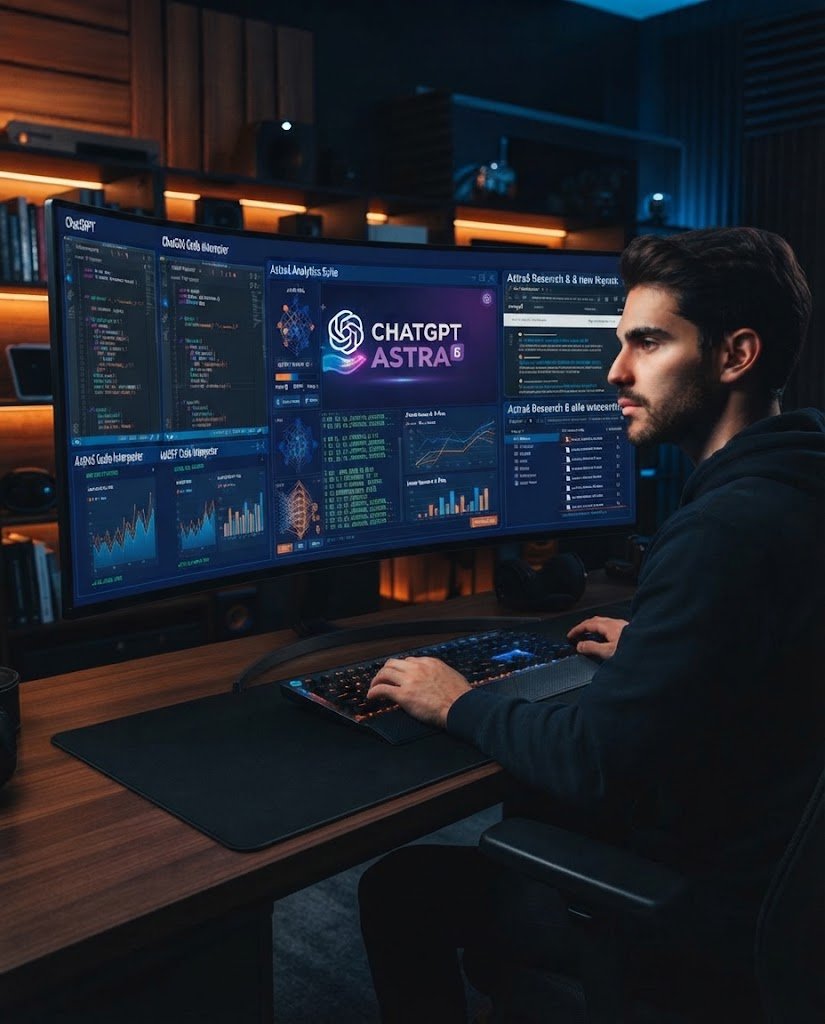
Artificial intelligence is no longer just a technology used for writing text, analyzing data, or creating images. Today, it has become an increasingly important part of the cybersecurity landscape, where organizations use it to detect threats and respond to attacks more quickly.
But there is another side to the story.
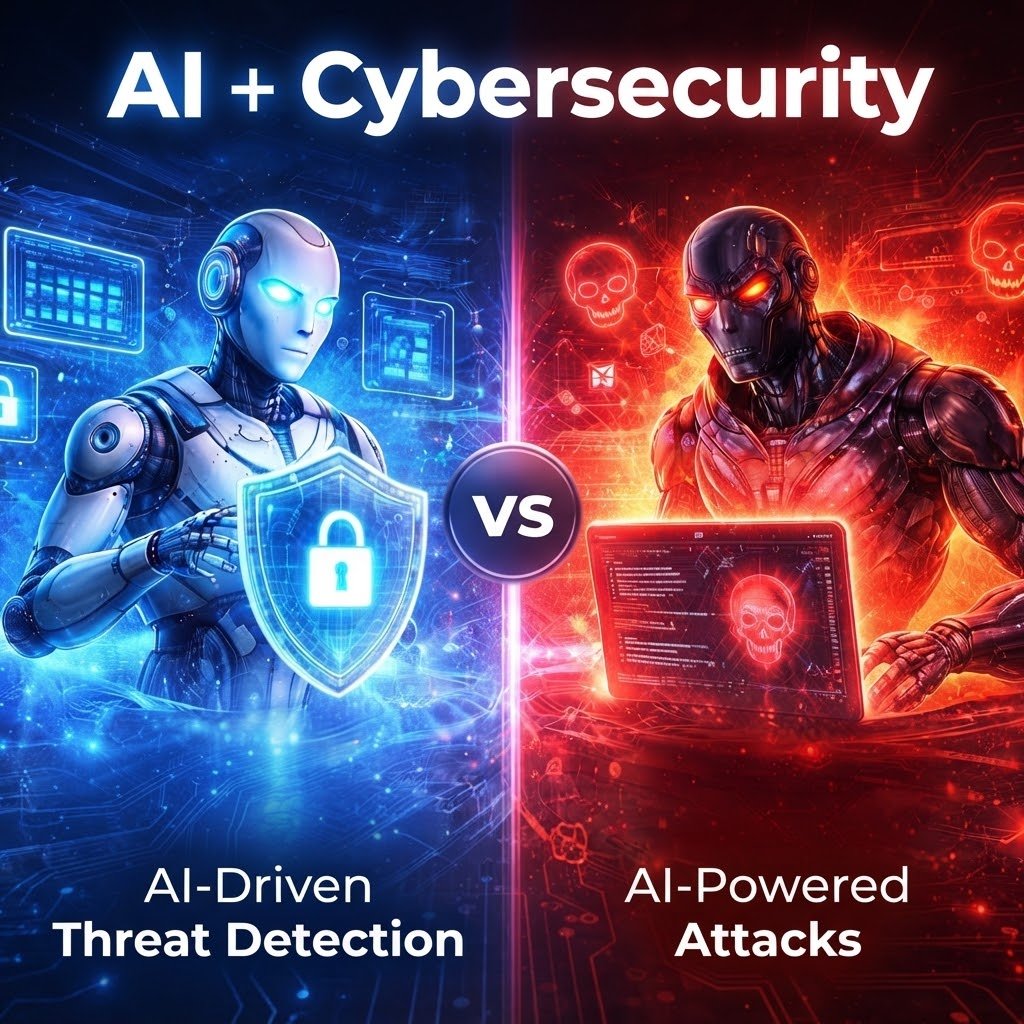
If defenders are using AI to protect their systems, attackers can also take advantage of this technology to develop faster and more sophisticated methods.
And this raises an important question:
If AI is available to both sides, who will win the cybersecurity race?
🛡️ How Is AI Helping Protect Systems?
Companies and organizations deal with huge amounts of data, system logs, login attempts, and network activity every day. It is difficult for security teams to analyze all of this information manually.
This is where AI can play an important role by processing large amounts of data quickly and identifying unusual patterns that may indicate a potential threat.
AI technologies can be used for:
- 🔎 Detecting abnormal behavior across networks.
- 🚨 Identifying potential attack indicators more quickly.
- 🛡️ Helping detect suspicious software and activities.
- ⚡ Accelerating incident response.
- 📊 Analyzing massive amounts of security data.
This allows cybersecurity teams to focus more on threats that require human intervention and specialized analysis.
⚔️ But What About the Attackers?
The problem is that AI is not a technology designed only for defense.
As these technologies continue to evolve, attackers can also use them to automate certain processes, analyze information, and develop more advanced attack methods.
This makes the cybersecurity landscape even more complex.
In the past, organizations mainly focused on defending themselves against attacks carried out by individuals or groups using specific tools and techniques.
Today, it is increasingly important to consider a scenario where AI becomes part of both the attack and the defense at the same time.
🤖 When AI Becomes Part of the Battle
Imagine a company’s security team using an AI-powered system to detect suspicious activity within seconds.
At the same time, an attacker could be using advanced technologies to automate parts of an attack and quickly adapt to defensive measures.
The competition is no longer simply:
Human vs. Machine
It is becoming:
AI vs. AI — with humans in the middle.
This changes the way we think about cybersecurity.
Having powerful security tools is no longer enough. These tools also need to be able to adapt, while being properly monitored and managed.
🔐 Does AI Make the Internet Safer?
The answer is not simple.
AI can help organizations detect threats more quickly and analyze massive amounts of data that would be difficult to process manually.
At the same time, greater AI capabilities mean that the misuse of these technologies can also have a greater impact.
That is why using AI in cybersecurity requires more than just advanced technology.
It requires:
Human oversight + strong security systems + clear policies + continuous testing.
Relying completely on an intelligent system without verifying its decisions can create new risks instead of solving existing ones.
🧠 Humans Are Still a Critical Part of the Equation
Despite the rapid development of AI, this does not mean that cybersecurity teams will become unnecessary.
On the contrary, as systems become more complex, experts who can understand context, assess risks, make decisions, and verify the results of intelligent systems become even more important.
The strongest approach for the future may not be AI instead of humans, but:
AI with humans.
AI can process data at incredible speed, while humans provide contextual understanding and make decisions that require expertise and responsibility.
🚀 Who Will Win the Cybersecurity Race?
It is difficult to identify a single winner.
But one thing is clear: AI will become an essential part of the future of cybersecurity.
Organizations that can use AI responsibly while maintaining human oversight and strong security controls will be in a better position to face future threats.
At the same time, attackers will continue looking for new ways to exploit emerging technologies.
So perhaps the real question is not:
“AI or hackers?”
But:
“Who can use AI better, faster, and more securely?”
That is the real race that has already begun.